
The Heat Is On: Can Enhanced Geothermal Deliver on Its Promise?
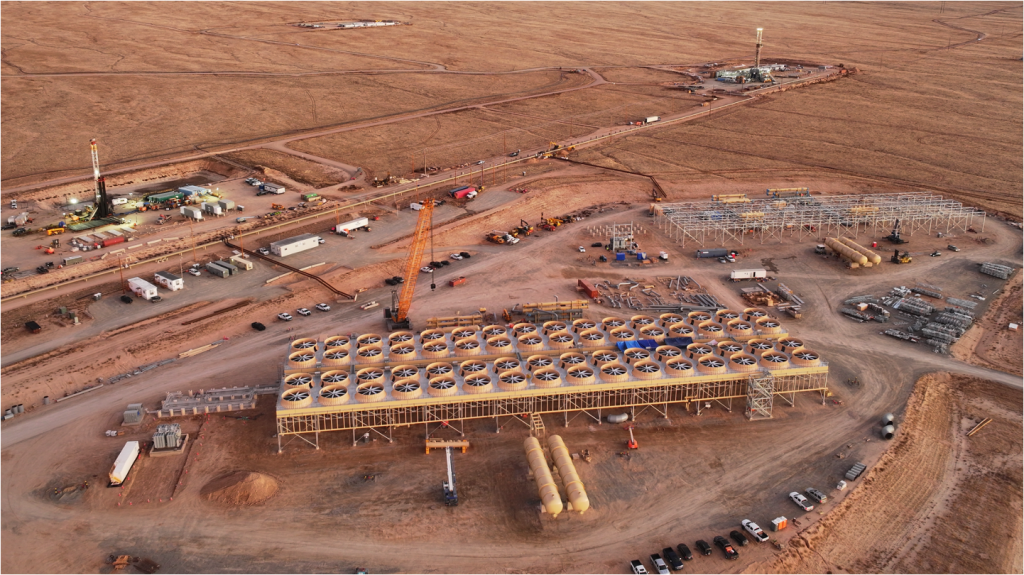
Clean firm power is the energy transition’s most underserved need. Fervo Energy, the Houston-based enhanced geothermal systems (EGS) company, raised $1.89 billion in its upsized initial public offering last week, listing on the New York Stock Exchange as clean energy’s biggest-ever IPO. We’ve tracked Fervo’s development since first writing about its technology breakthrough nearly three years ago. Today, Fervo is widely seen as the most likely company to commercialize next-generation geothermal power at scale.
But public market investors are a different audience than the venture capitalists and strategic partners that funded Fervo’s rise. So, how did we get here?
Repurposing Fracking Technology
Fervo is best known for adapting the same horizontal drilling and hydraulic fracturing techniques that unlocked the shale revolution and applying them to geothermal reservoirs, dramatically expanding the geographic footprint of viable siting beyond hydrothermal hotspots. In partnership with the Department of Energy, Fervo demonstrated at its Project Red site in Nevada that EGS wells could produce baseload power at commercially relevant flow rates, a milestone that had eluded the industry for decades.
EGS, in theory, turns almost any patch of the Earth’s crust into a potential power plant, given sufficient depth and the right geology. Fervo’s Cape Station project in Utah is expected to deliver 400 MW to the grid by the end of the decade under a long-term contract with Southern California Edison. The project represents the first real-world test of the company’s thesis at meaningful scale.
The Early Bird
As a first-mover, Fervo’s operational data, particularly subsurface performance data from Project Red and Cape Station, would take years for a new entrant to collect and analyze. Fervo has assembled a technical team with deep roots in the oilfield services and unconventional drilling world, and that institutional knowledge is not easily cloned; drilling expertise is sticky. The company also benefits from the long-duration nature of its power purchase agreements, which provide revenue visibility and reduce near-term execution risk.
Fervo’s permitting and siting positions may be its strongest differentiator. EGS often requires drilling on federal land, and navigating the Bureau of Land Management’s leasing and environmental review processes is slow, expensive, and relationship-dependent. Fervo’s existing land position in the Great Basin and established working relationships with federal agencies are a competitive asset that would be difficult for others to replicate quickly.
To be clear, while Fervo has filed patents on specific drilling methods, the underlying technologies are broadly licensed and widely practiced. A well-capitalized energy company with oilfield services expertise could plausibly mount a credible EGS program within a few years, which could constrain Fervo’s pricing power in the future.
“Microsoft, Google, and Meta have all made public commitments to procure clean firm power, and geothermal is one of the few technologies that can satisfy both criteria.”
The Rest of the Field
Quaise Energy, another EGS developer, has attracted significant venture capital and is pursuing a different technical approach – using millimeter-wave energy to vaporize rock and reach depths that conventional drill bits cannot. Sage Geosystems, backed by Halliburton, is working on a closed-loop EGS variant that avoids some of the hydraulic fracturing concerns fueling opposition to Fervo’s technology in certain markets. Neither company is as far along commercially as Fervo, but both are well-funded and could close the gap.
While conventional geothermal operators like Ormat Technologies and Cyrq Energy are not direct EGS competitors, they compete for the same customer base and the same federal incentives. Ormat is a mature, profitable business with deep utility relationships. If EGS proves technically challenging to scale, Ormat could be a beneficiary.
The broader competitive frame includes nuclear, battery storage, and long-duration storage technologies, all of which are competing for the same baseload capacity. Small modular reactors (SMRs) remain expensive and unproven at commercial scale, but the political tailwinds behind nuclear have strengthened considerably in recent years. Fervo’s success depends, in part, on geothermal arriving at scale before SMRs do.
Regulatory Environment
The federal policy environment around EGS is currently favorable but remains fragile. The Department of Energy’s loan programs have been an important source of low-cost capital for the sector, and the Inflation Reduction Act’s production tax credit for geothermal survived the One Big, Beautiful Bill Act. But legislative action, regulatory rollback, or changes to DOE lending priorities could materially alter the industry’s cost of capital and project economics.
Order Book
Microsoft, Google, and Meta have all made public commitments to procure clean firm power, and geothermal is one of the few technologies that can satisfy both criteria. Google signed a 24/7 clean energy agreement with Fervo in 2022, and similar arrangements with other hyperscalers could meaningfully de-risk the company’s development pipeline.
Still, Fervo remains a developing company operating on a frontier technology. Cape Station has not yet produced power at commercial scale, and reservoir performance can degrade in ways that are difficult to predict in advance. Fervo’s long-term success depends on demonstrating that its wells perform as modeled not just for months, but for decades. Until that track record exists, some uncertainty will likely persist.
The Takeaway
Though new generation capacity is increasingly coming from variable renewables, the market for clean firm power is large and growing. Fervo is the most credible bet that EGS can claim a meaningful share of it. But public markets will demand results, not promises. Long-term investors who can tolerate frontier-technology risk may find Fervo’s story compelling. Others may wait for the wells to speak for themselves.
The views expressed here are those of the author and are intended for informational and educational purposes only. This content should not be relied upon as investment advice or a recommendation regarding any investment strategy or security.

David Root
Head of Product Management, FFI Solutions

Head of Product Management